

API security · Fintech · 3 min read
Payment API vulnerabilities worth knowing about
Payment APIs fail at logic, not cryptography, and logic failures settle in real money.
Payment API Vulnerabilities: Citical Threats You Need To Know
APIs are how software talks to software, and payment APIs are where that conversation carries money. The more of a business that runs through them, the more an authorisation or logic gap is worth.
Here are some critical API security threats you should be aware of:
Insecure API Endpoints
Threat: Payment APIs without secure endpoints can lead to data breaches. For example, an unsecured API endpoint might not implement SSL/TLS encryption, making it susceptible to Man-in-The-Middle (MITM) attacks where attackers intercept financial data during transmission.
Mitigation: Enforce HTTPS on all API endpoints to ensure data encryption in transit. Utilizing HSTS (HTTP Strict Transport Security) can further enhance security by forcing browsers to use secure connections.
Flawed Authentication Mechanisms
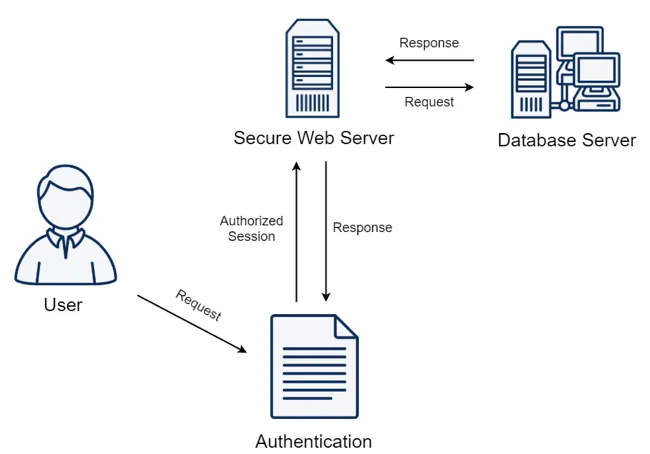
Threat: APIs that rely on weak or improperly implemented authentication mechanisms are prone to unauthorized access. A notable incident involved an attacker exploiting weak API keys in a payment processing API, allowing them to initiate unauthorized transactions.
Mitigation: Use a proven authentication protocol such as OAuth 2.0, require strong API keys and rotate them on a schedule. Rate limiting on the authentication path blunts brute force against whatever is left.
API Injection Attacks
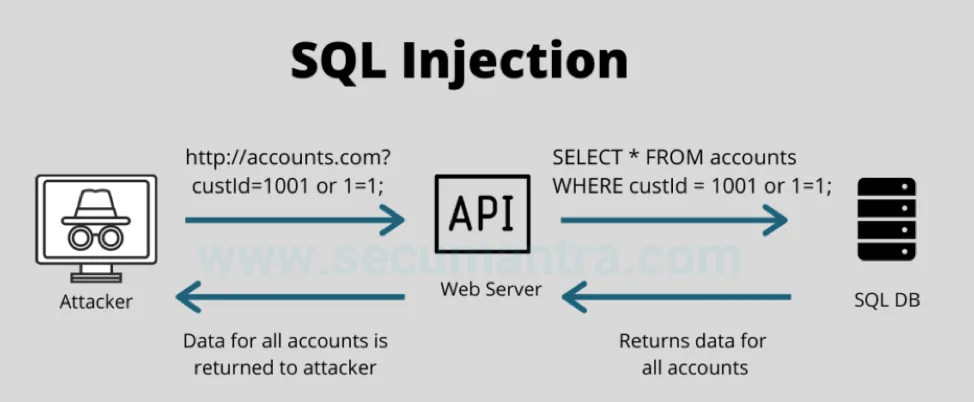
Threat: APIs vulnerable to SQL Injection or Command Injection can be manipulated to gain unauthorized access to the database or execute arbitrary commands. A real-world scenario involved attackers injecting malicious SQL queries through a payment API’s input field, compromising customer payment information.
Mitigation: use prepared statements and parameterised queries for every database call, with no exceptions for internal paths. Validate input against an allow-list before it reaches anything that runs a shell.
Excessive Data Exposure
Mitigation: Specify explicit, trusted domains in CORS policies and avoid overly permissive settings. Implement anti-CSRF tokens to protect against CSRF attacks.
Broken Access Control
Threat: Insufficient access control allows attackers to access or modify resources they should not access. An incident occurred where an attacker exploited broken access controls in a payment API to access other users’ transaction histories.
Mitigation: Enforce strict access control measures, ensuring that users can only access resources pertinent to their privileges. Regularly review and update access control policies to cover new API endpoints and functionalities.
Conclusion
Payment APIs fail in ways that convert straight into money leaving an account, which is what separates them from most API security work. None of the failures above is exotic. They survive because the logic is tested for the path a customer takes and not for the path an attacker takes.
In short
- Point 1
- Every value-affecting field must be recomputed server-side, never trusted from the client.
- Point 2
- Webhook endpoints need signature verification and replay protection, not just a secret path.
- Point 3
- Object-level authorisation on transaction records is the highest-severity gap in this class.
- Point 4
- Idempotency keys are a security control as much as a reliability one.